Sunday, 26 August 2012
METHYL CELLULOSE
Methyl cellulose (or methylcellulose) is a chemical compound derived from cellulose. It is a hydrophilic white powder in pure form and dissolves in cold (but not in hot) water, forming a clear viscous solution or gel. It is sold under a variety of trade names and is used as a thickener and emulsifier in various food and cosmetic products, and also as a treatment of constipation. Like cellulose, it is not digestible, not toxic, and not an allergen.
USES
Thickener and emulsifier
Methyl cellulose is often added to hair shampoos, tooth pastes and liquid soaps, to generate their characteristic thick consistency. This is also done for foods, for example ice cream or croquette. Methyl cellulose is also an important emulsifier, preventing the separation of two mixed liquids.
The E number of methyl cellulose as food additive is E461.
Methyl cellulose (AKA Methocel produced by Dow Chemical or Mecellose produced by Samsung Fine Chemicals) is also used as paint rheological modifier to prevent paint sagging problem.
Treatment of constipation
When eaten, methyl cellulose is not absorbed by the intestines but passes through the digestive tract undisturbed. It attracts large amounts of water into the colon, producing a softer and bulkier stool. It is used to treat constipation, diverticulosis, hemorrhoids and irritable bowel syndrome. It should be taken with sufficient amounts of fluid to prevent dehydration.
Because it absorbs water and potentially toxic materials and increases viscosity, it can also be used to treat diarrhea.
A well-known trade name of methyl cellulose when used as a drug is Citrucel by GlaxoSmithKline, but generic versions are also widely available.
Lubricant
Methyl cellulose is used as a variable viscosity personal lubricant; it is the main ingredient in K-Y Jelly.
Clinical
The lubricating property of methyl cellulose is of particular benefit in the treatment of dry eyes (Keratoconjunctivitis Sicca).[1] Dry eyes are common in the elderly and is often associated with rheumatoid arthritis. The lacrimal gland and the accessory conjunctival glands produce fewer tears. Methyl cellulose may be used as a tear substitute.
Artificial tears and saliva
Solutions containing methyl cellulose or similar cellulose derivatives are used as substitute for tears or saliva if the natural production of these fluids is disturbed.
Nutritional supplement capsules
Methyl cellulose is used in the manufacture of capsules in nutritional supplements, its edible and nontoxic properties provide a vegetarian alternative to the use of gelatin.
Construction materials
Methyl cellulose finds a major application as a performance additive in construction materials. It is added to mortar dry mixes to improve the mortar's properties such as workability, open and adjustment time, water retention, viscosity, adhesion to surfaces etc. Construction grade methyl cellulose is to not to be identified with food and pharmaceutical grade methyl cellulose and hydroxypropyl methyl cellulose, since it may be cross-linked with glyoxal for easy dispersion in water.
The construction materials can be cement based or gypsum based. Notable examples of dry mixture mortars which utilize methyl cellulose include: tile adhesives, EIFS, insulating plasters, hand-trowed and machine sprayed plaster, stucco, self-leveling flooring, extruded cement panels, skim coats, joint & crack fillers, and tile grouts. Typical usage is about 0.2% ~ 0.5% of total dry powder weight for dry mixture
Derivatives of methyl cellulose, which improve upon the performance characteristics, include hydroxypropyl methyl cellulose (HPMC) and hydroxyethyl methyl cellulose (HEMC). These derivatives typically improve the characteristics such as water retention, vertical surface slip-resistance, open time, etc.
Glue and binder
Methyl cellulose can be employed as a mild glue which can be washed away with water. This may be used in the fixation of delicate pieces of art as well as in book conservation to loosen and clean off old glue from spines and bookboards.
Methyl cellulose is the main ingredient in many wallpaper pastes. It is also used as a binder in pastel crayons and also as a binder in medications.
Paper and textile sizing
Methyl cellulose is used as sizing in the production of papers and textiles as it protects the fibers from absorbing water or oil.
SOURCE : http://en.wikipedia.org/wiki/Methyl_cellulose
Read More..


Wednesday, 22 August 2012
POLYETHYLENE GLYCOL
POLYETHYLENE GLYCOL / PEG PEG is soluble in water, methanol, benzene, and dichloromethane, and is insoluble in diethyl ether and hexane. It is coupled to hydrophobic molecules to produce non-ionic surfactants. PEGs contain potential toxic impurities, such as ethylene oxide and 1,4-dioxane. PEGs are nephrotoxic if applied to damaged skin. Polyethylene glycol is produced by the interaction of ethylene oxide with water, ethylene glycol, or ethylene glycol oligomers.
The reaction is catalyzed by acidic or basic catalysts. Ethylene glycol and its oligomers are preferable as a starting material instead of water, because they allow the creation of polymers with a low polydispersity (narrow molecular weight distribution). Polymer chain length depends on the ratio of reactants. HOCH2CH2OH + n(CH2CH2O) → HO(CH2CH2O)n+1H Depending on the catalyst type, the mechanism of polymerization can be cationic or anionic. The anionic mechanism is preferable because it allows one to obtain PEG with a low polydispersity. Polymerization of ethylene oxide is an exothermic process. Overheating or contaminating ethylene oxide with catalysts such as alkalis or metal oxides can lead to runaway polymerization, which can end in an explosion after a few hours. Polyethylene oxide, or high-molecular weight polyethylene glycol, is synthesized by suspension polymerization. It is necessary to hold the growing polymer chain in solution in the course of the polycondensation process. The reaction is catalyzed by magnesium-, aluminium-, or calcium-organoelement compounds. To prevent coagulation of polymer chains from solution, chelating additives such as dimethylglyoxime are used. Alkali catalysts such as sodium hydroxide (NaOH), potassium hydroxide (KOH), or sodium carbonate (Na2CO3) are used to prepare low-molecular-weight polyethylene glycol.
Chemical uses
Polyethylene glycol has a low toxicity and is used in a variety of products. The polymer is used as a lubricating coating for various surfaces in aqueous and non-aqueous environments.Since PEG is a flexible, water-soluble polymer, it can be used to create very high osmotic pressures (on the order of tens of atmospheres). It also is unlikely to have specific interactions with biological chemicals. These properties make PEG one of the most useful molecules for applying osmotic pressure in biochemistry experiments, in particular when using the osmotic stress technique.[citation needed] Polyethylene glycol is also commonly used as a polar stationary phase for gas chromatography, as well as a heat transfer fluid in electronic testers. PEO (polyethylene oxide) can serve as the separator and electrolyte solvent in lithium polymer cells. Its low diffusivity often requires high temperatures of operation, but its high viscosity - even near its melting point - allows very thin electrolyte layers to be created. While crystallization of the polymer can degrade performance, many of the salts used to carry charge can also serve as a kinetic barrier to the formation of crystals. Such batteries carry greater energy for their weight than other lithium ion battery technologies. PEG has also been used to preserve objects that have been salvaged from underwater, as was the case with the warship Vasa in Stockholm, the Mary Rose in England and the Ma'agan Michael Ship in Israel. It replaces water in wooden objects, making the wood dimensionally stable and preventing warping or shrinking of the wood when it dries. In addition, PEG is used when working with green wood as a stabilizer, and to prevent shrinkage. PEG is often used (as an internal calibration compound) in mass spectrometry experiments, with its characteristic fragmentation pattern allowing accurate and reproducible tuning. PEG derivatives, such as narrow range ethoxylates, are used as surfactants. PEG has been used as the hydrophilic block of amphiphilic block copolymers used to create some polymersomes.
Biological uses
PEG is commonly used as a precipitant for plasmid DNA isolation and protein crystallization. X-ray diffraction of protein crystals can reveal the atomic structure of the proteins.
Polymer segments derived from PEG polyols impart flexibility to polyurethanes for applications such as elastomeric fibers (spandex) and foam cushions. In microbiology, PEG precipitation is used to concentrate viruses. PEG is also used to induce complete fusion (mixing of both inner and outer leaflets) in liposomes reconstituted in vitro.
Gene therapy vectors (such as viruses) can be PEG-coated to shield them from inactivation by the immune system and to de-target them from organs where they may build up and have a toxic effect. The size of the PEG polymer has been shown to be important, with larger polymers achieving the best immune protection.
PEG is a component of stable nucleic acid lipid particles (SNALPs) used to package siRNA for use in vivo.
In blood banking, PEG is used as a potentiator to enhance detection of antigens and antibodies.
When working with phenol in a laboratory situation, PEG 300 can be used on phenol skin burns to deactivate any residual phenol.
Commercial uses
PEG is the basis of many skin creams (as cetomacrogol) and sexual lubricants (frequently combined with glycerin).
PEG is used in a number of toothpastes as a dispersant. In this application, it binds water and helps keep xanthan gum uniformly distributed throughout the toothpaste.
PEG is also under investigation for use in body armor, and in tattoos to monitor diabetes.
In low-molecular-weight formulations (i.e PEG 400), it is used in Hewlett-Packard designjet printers as an ink solvent and lubricant for the print heads.
PEG is also one of the main ingredients in paintball fills, due to its thickness and flexibility. However, as early as 2006, some Paintball manufacturers began substituting cheaper alternatives for PEG.[citation needed]
PEG is a major ingredient in e-liquid, used in electronic cigarettes. It is generally used as a 30%-50% proportion of the liquid that is vaporized. Its use is designed to give a smoother effect to the vaporizing action.[citation needed] PEG is also used as an anti-foaming agent in food[28] - its INS number is 1521[29] or E1521 in the EU.
Industrial uses
Nitrate ester-plasticized polyethylene glycol is used in Trident II ballistic missile solid rocket fuel.
Dimethyl ethers of PEG are the key ingredient of Selexol, a solvent used by coal-burning, integrated gasification combined cycle (IGCC) power plants to remove carbon dioxide and hydrogen sulfide from the gas waste stream.
PEG has been used as the gate insulator in an electric double-layer transistor to induce superconductivity in an insulator.
PEG is also used as a polymer host for solid polymer electrolytes. Although not yet in commercial production, many groups around the globe are engaged in research on solid polymer electrolytes involving PEG, with the aim of improving their properties, and in permitting their use in batteries, electro-chromic display systems, and other products in the future.
Source : http://en.wikipedia.org/wiki/Polyethylene_glycol
 Read More..
The reaction is catalyzed by acidic or basic catalysts. Ethylene glycol and its oligomers are preferable as a starting material instead of water, because they allow the creation of polymers with a low polydispersity (narrow molecular weight distribution). Polymer chain length depends on the ratio of reactants. HOCH2CH2OH + n(CH2CH2O) → HO(CH2CH2O)n+1H Depending on the catalyst type, the mechanism of polymerization can be cationic or anionic. The anionic mechanism is preferable because it allows one to obtain PEG with a low polydispersity. Polymerization of ethylene oxide is an exothermic process. Overheating or contaminating ethylene oxide with catalysts such as alkalis or metal oxides can lead to runaway polymerization, which can end in an explosion after a few hours. Polyethylene oxide, or high-molecular weight polyethylene glycol, is synthesized by suspension polymerization. It is necessary to hold the growing polymer chain in solution in the course of the polycondensation process. The reaction is catalyzed by magnesium-, aluminium-, or calcium-organoelement compounds. To prevent coagulation of polymer chains from solution, chelating additives such as dimethylglyoxime are used. Alkali catalysts such as sodium hydroxide (NaOH), potassium hydroxide (KOH), or sodium carbonate (Na2CO3) are used to prepare low-molecular-weight polyethylene glycol.
Chemical uses
Polyethylene glycol has a low toxicity and is used in a variety of products. The polymer is used as a lubricating coating for various surfaces in aqueous and non-aqueous environments.Since PEG is a flexible, water-soluble polymer, it can be used to create very high osmotic pressures (on the order of tens of atmospheres). It also is unlikely to have specific interactions with biological chemicals. These properties make PEG one of the most useful molecules for applying osmotic pressure in biochemistry experiments, in particular when using the osmotic stress technique.[citation needed] Polyethylene glycol is also commonly used as a polar stationary phase for gas chromatography, as well as a heat transfer fluid in electronic testers. PEO (polyethylene oxide) can serve as the separator and electrolyte solvent in lithium polymer cells. Its low diffusivity often requires high temperatures of operation, but its high viscosity - even near its melting point - allows very thin electrolyte layers to be created. While crystallization of the polymer can degrade performance, many of the salts used to carry charge can also serve as a kinetic barrier to the formation of crystals. Such batteries carry greater energy for their weight than other lithium ion battery technologies. PEG has also been used to preserve objects that have been salvaged from underwater, as was the case with the warship Vasa in Stockholm, the Mary Rose in England and the Ma'agan Michael Ship in Israel. It replaces water in wooden objects, making the wood dimensionally stable and preventing warping or shrinking of the wood when it dries. In addition, PEG is used when working with green wood as a stabilizer, and to prevent shrinkage. PEG is often used (as an internal calibration compound) in mass spectrometry experiments, with its characteristic fragmentation pattern allowing accurate and reproducible tuning. PEG derivatives, such as narrow range ethoxylates, are used as surfactants. PEG has been used as the hydrophilic block of amphiphilic block copolymers used to create some polymersomes.
Biological uses
PEG is commonly used as a precipitant for plasmid DNA isolation and protein crystallization. X-ray diffraction of protein crystals can reveal the atomic structure of the proteins.
Polymer segments derived from PEG polyols impart flexibility to polyurethanes for applications such as elastomeric fibers (spandex) and foam cushions. In microbiology, PEG precipitation is used to concentrate viruses. PEG is also used to induce complete fusion (mixing of both inner and outer leaflets) in liposomes reconstituted in vitro.
Gene therapy vectors (such as viruses) can be PEG-coated to shield them from inactivation by the immune system and to de-target them from organs where they may build up and have a toxic effect. The size of the PEG polymer has been shown to be important, with larger polymers achieving the best immune protection.
PEG is a component of stable nucleic acid lipid particles (SNALPs) used to package siRNA for use in vivo.
In blood banking, PEG is used as a potentiator to enhance detection of antigens and antibodies.
When working with phenol in a laboratory situation, PEG 300 can be used on phenol skin burns to deactivate any residual phenol.
Commercial uses
PEG is the basis of many skin creams (as cetomacrogol) and sexual lubricants (frequently combined with glycerin).
PEG is used in a number of toothpastes as a dispersant. In this application, it binds water and helps keep xanthan gum uniformly distributed throughout the toothpaste.
PEG is also under investigation for use in body armor, and in tattoos to monitor diabetes.
In low-molecular-weight formulations (i.e PEG 400), it is used in Hewlett-Packard designjet printers as an ink solvent and lubricant for the print heads.
PEG is also one of the main ingredients in paintball fills, due to its thickness and flexibility. However, as early as 2006, some Paintball manufacturers began substituting cheaper alternatives for PEG.[citation needed]
PEG is a major ingredient in e-liquid, used in electronic cigarettes. It is generally used as a 30%-50% proportion of the liquid that is vaporized. Its use is designed to give a smoother effect to the vaporizing action.[citation needed] PEG is also used as an anti-foaming agent in food[28] - its INS number is 1521[29] or E1521 in the EU.
Industrial uses
Nitrate ester-plasticized polyethylene glycol is used in Trident II ballistic missile solid rocket fuel.
Dimethyl ethers of PEG are the key ingredient of Selexol, a solvent used by coal-burning, integrated gasification combined cycle (IGCC) power plants to remove carbon dioxide and hydrogen sulfide from the gas waste stream.
PEG has been used as the gate insulator in an electric double-layer transistor to induce superconductivity in an insulator.
PEG is also used as a polymer host for solid polymer electrolytes. Although not yet in commercial production, many groups around the globe are engaged in research on solid polymer electrolytes involving PEG, with the aim of improving their properties, and in permitting their use in batteries, electro-chromic display systems, and other products in the future.
Source : http://en.wikipedia.org/wiki/Polyethylene_glycol

Wednesday, 15 August 2012
KANGEN WATER
Kangen water is one of many brand names for so-called alkaline waters promoted as a healthier form of water with significant anti-oxidant properties. It's generally presented as the result of an electrolysis process which separates ordinary water (H20) into two separate entities. One half of the separated water becomes an acidic HO molecule, while the other becomes an alkaline OH molecule. The producers of Kangen water bottle the alkaline OH water for drinking purposes, while the acidic HO molecule is used for topical applications.
The name kangen is Japanese for "return to the origin," which helps to explain the philosophy behind its promotion as a health food. According to one theory, the human body needs both acids and alkalis to properly process foods, make repairs and generally remain in good working order.
Ingesting too many acidic foods and beverages, most notably carbonated soft drinks, can lower the body's natural pH levels to dangerously acidic levels. Kangen water, or other alkaline or ionized waters, could help restore a the body's proper pH level and perhaps even become more alkaline, which would be a positive development, in theory.
Kangen water and other ionized or alkaline water products are also said to have smaller molecules, which means they are more readily absorbed by the body. Ordinary tap water or unprocessed bottled waters have larger water molecules which tend to pass through the body without reaching individual cells. Without proper re-hydration, these cells can suffer from a form of cellular dehydration and either die too soon or fail to function efficiently.
Kangen water is believed to have the ability to rehydrate these cells before they essentially dry out. Kangen water is water that has gone through a Special Electrolysis Process that changes the pH of the water to ALKALINE and much, much more.
Kangen water is also known to have small clusters of 5 to 6 water molecules , as a result of the electrolysis process. Making it a Super Hydrating water. You can taste the difference in your first glass. Tap water is typically 12 to 15 molecules per cluster. That is over double the size of Kangen water. Small clusters also mean that your body can readily absorb the minerals in this water into your cells in mere seconds. Reverse Osmosis, Distilled and tap water will slosh around in your stomach and often flush key minerals out of your body because they lack these important properties. The electrical charge of Kangen machine re-arranges healthy minerals that are naturally included in your tap water. As a result, Kangen water contains essential minerals, such as Calcium, Magnesium, and Potassium, in an ionic form that can be assimilated immediately into your body.
Kangen Water® is delicious water created from Enagic's innovative water technology. Not only do these devices filter your tap water, but they also produce ionized alkaline and acidic waters through electrolysis. These waters can be used for various purposes, including drinking, cooking, beauty, and cleaning.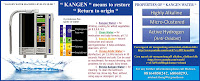 Read More..
The name kangen is Japanese for "return to the origin," which helps to explain the philosophy behind its promotion as a health food. According to one theory, the human body needs both acids and alkalis to properly process foods, make repairs and generally remain in good working order.
Ingesting too many acidic foods and beverages, most notably carbonated soft drinks, can lower the body's natural pH levels to dangerously acidic levels. Kangen water, or other alkaline or ionized waters, could help restore a the body's proper pH level and perhaps even become more alkaline, which would be a positive development, in theory.
Kangen water and other ionized or alkaline water products are also said to have smaller molecules, which means they are more readily absorbed by the body. Ordinary tap water or unprocessed bottled waters have larger water molecules which tend to pass through the body without reaching individual cells. Without proper re-hydration, these cells can suffer from a form of cellular dehydration and either die too soon or fail to function efficiently.
Kangen water is believed to have the ability to rehydrate these cells before they essentially dry out. Kangen water is water that has gone through a Special Electrolysis Process that changes the pH of the water to ALKALINE and much, much more.
Kangen water is also known to have small clusters of 5 to 6 water molecules , as a result of the electrolysis process. Making it a Super Hydrating water. You can taste the difference in your first glass. Tap water is typically 12 to 15 molecules per cluster. That is over double the size of Kangen water. Small clusters also mean that your body can readily absorb the minerals in this water into your cells in mere seconds. Reverse Osmosis, Distilled and tap water will slosh around in your stomach and often flush key minerals out of your body because they lack these important properties. The electrical charge of Kangen machine re-arranges healthy minerals that are naturally included in your tap water. As a result, Kangen water contains essential minerals, such as Calcium, Magnesium, and Potassium, in an ionic form that can be assimilated immediately into your body.
Kangen Water® is delicious water created from Enagic's innovative water technology. Not only do these devices filter your tap water, but they also produce ionized alkaline and acidic waters through electrolysis. These waters can be used for various purposes, including drinking, cooking, beauty, and cleaning.
Tuesday, 6 December 2011
TEG/TRIETHYLENE GLYCOL

TEG/TRIETHYLENE GLYCOL
Triethylene glycol is a colorless liquid with a slight, sweet odor. It properties closely resemble those of diethylene glycol. In many instances, the applications for diethylene glycol and triethylene glycol overlap. Because triethylene glycol has a higher boiling point, it may be used in preference to diethylene glycol when a less volativle compound is required.
Because it has two ether and two hydroxyl groups, TEG is a good solvent for nitrocellulose as well as for various gums and resins. It is miscible with water and many organic solvents. TEG is a solvent used in the formulation of steam-set printing inks.
TEG is an efficient hygroscopic agent. This property makes it useful as a liquid desiccant for removing water from natural gas, thus preventing the formation of hydrates in long distance transmissions lines. TEG is also used as dessicant in small packaged plants located at the gas well head in order to eliminate the need of line heaters in field gathering systems.
In air conditioning systems designed for dehumidifying air, TEG allows for the removal of water vapor without cooling the air.
This offers advantages particularly in commercial installations where comfort cooling is not required. When vaporized under proper conditions in specially designed vaporizing devices for air sanitation, the air-treatment grade of TEG aids in the control of bacteria and virus content of air.
In the tovacco industry, it is standard practice to treat the tobacco industry, it is standard practice to treat the tobacco with humectants such as TEG or propylene glycol so that the tovacco reaches the consumer in proper condition.
TEG is also used n the plasticization of composition cork and serves as a solvent for resin impregnants and other additives.
TEG gives increased pliability to various plastics, particularly cellulose derivatives. it aids in the retention of flexibility, wven in dry atmospheres. Ester derivatives of TEG are important plasticizer for polyvinyl butyral resins, nitrocellulose lacquers, vinyl and polyvinyl chloride resins, and polyvinyl acetate. Other ester derivatives are plasticizers for synthetic rubber compounds or for cellulose esters.
TEG is used in the manufacture of alkyd type resins useful as laminating agents and in adhesives. Polyesters derived from TEG are useful in various applications-some as plasticizers and others as low pressure laminates for glass fibers, asbestos, cloth or paper.
Besides being useful as plasticizers, the fatty acid derivatives of TEG are used as emulsifiers, demulsifiers and lubricants.
Mitures of TEG and water exhibit selective solvent properties for the separation of aromatic hydrocarbons from mixtures containing paraffinic hyddrovarbons. Llike diglycol, TEG is used commercially to recover high purity aromatic fractions from mixtures of light oil fractions.
Special inhibited grades of TEG are available for use as heat transfer fluids, particularly in hight temperature application.
A special high purity grade of TEG is available for use in celllophane and paper that may come in contact with food. Read More..
Thursday, 7 July 2011

ADVERTISING AND PROMOTION WITH CHEMICAL-NEWS

Dalam situasi dan kondisi yang serba cepat dan persaingan bisnis yang ketat maka dibutuhkan sarana pemasaran.
Sarana pemasaran bisa melalui Majalah, Surat Kabar, Televisi, Radio semua hal tersebut membutuhkan biaya yang tidak sedikit tergantung berapa lama iklan ditayangkan.
Ada solusi murah, cepat dan efisien yaitu melalui " Iklan di Internet ". CHEMICAL-NEWS sebagai sarana informasi dibidang bahan-bahan kimia dengan peminat dibidang industri membuka kesempatan bagi Anda untuk beriklan di tempat kami.
Chemical-News adalah sarana pemasaran yang murah, cepat dan efisien untk memasarkan produk Anda yang bergerak dibidang : mesin-mesin industri, bahan-bahan kimia, jasa percetakan dan undangan, event organizer, jasa expedisi pengiriman barang, dll.
Tunggu apa lagi, segera hubungi kami untuk informasi tarif iklan ke 02168068293, 08164850242, email : chemical_info@yahoo.com.
Salam sukses dan raih masa depan yang penuh gemilang.
Michael Thang
Read More..
Tuesday, 23 November 2010
MONOETHYLENE GLYCOL/ MEG

MEG
ETHYLENE GLYCOL/EG is shortname of MEG/ MONOETHYLENE GLYCOL.
EG is a clolorless, practically odorless, low-volatile, hygroscopic liquid. It is completely miscible with water and many organic liquids.
The low volatility and low molecular weight of ethyleen glycol, coupled with low solvent action on automobile finishes, make EG an ideal base for all winter automobile antifreeze.
Asphalt emulsion paints are protected from freezing by the addition of EG; freezing of these emulsions would break the suspension. Carbon dioxide pressure type fire extinguishers and wet sprinkler systems often contain EG to prevent freeze ups.
Aqueous EG solutions are used as heat transfer solutions at low termperatures and at elevated temperatures. As low temperature coolants in refrigeration systems, aqueous solutions of EG are less corrosive than brine. As a high temperature coolant, aqueous solutions of EG find application in electronic tubes.
Most applications involving ethylene glycol for anti freeze and coolant used require specially inhibited EG.
EG is used in brake and shock absorber fluids to help dissolve inhibitors, counteract rubber swelling, and inhibit foam formation.
Mixtures of glycerol and EG are nnitrated in the presence of sulfuric acid to form solutions of nitroglycerine in EG dinitrate. These solutions are used in the manufacture of low freezing dynamite. EG dinitrate is the explosive ingredient that depresses the feezing point and makes dynamite safer to handle in cold weather.
Polyester resins based on maleic and phthalic anhydrides, EG, and vinyl type monomers are important in the low pressure laminating of glass fibers, asbestos, cloth, and paper.
Polyester glass fiber laminates are used in making furniture, suitcases, boat hulls, aircraft parts, and automobile bodies.
EG reacts with dibasic acids to form alkyd type resins. These resins are of interest to modify synthetic rubbers, in adhesives, and in other applications. Alkyds made from EG and Phytalic anhydride are used with similar resins based on glycerol or pentaerythritol in the manufacture of surface coatings.
Polyester fibers and films are made from the condensation product of EG and Dimethyl Terepthhalate or terephtalic acid. Polyester fibers have had the most dramatic growth of all synthetic fibers. The textile industry concensus is that polyester fiber is ideally suited to satisfy customer demand for a medium priced fiber with " ease of care " and durability properties. It is also being used in tire cord, carpeting, and other industrial end use areas.
Rosin esters of EG are plasticizers in adhesives, laquers, and enamels. EGis readily esterified with mono and di carboxylic acids to yield solvents, resins and plasticizers.
Water dispersions of urea formaldehyde and melamine formaldehyde are stabilized against gel formation and viscocity changes by the use of EG.
Hight purity of EG ( Iron and chloride free ) is a solvent and suspending medium for ammonium perborate, the conductor in practically all electrolytic capacitors. EG is used in these capacitors because it is relatively non volatile, non corrosive to aluminium, and has excellent electrical properties.
Capacitors are essential parts in electric motors, radios, and other electronic equipment.
EG is a humectant for textile fibers, paper, leather, adhesives, and glue. It used helps make these products softer, more pliable, and more durable. EG is about one and one half times as hygroscopic as glycerol at normal room temperatures and humidities.
For any special requirement please feel free contact me.
Keep in touch,
Michael Thang
Marketing Director and business development. Read More..
Subscribe to:
Posts (Atom)



 Posts
Posts


